Contents
Weaving The Web

The web is the central element of the dreamcatcher and is believed to catch bad dreams. Starting from the center is crucial for maintaining symmetry as you weave outward. The process involves looping and knotting the suede lace through the wrapped hoop, creating a pattern that resembles a spider’s web.
How tight should the weave be? This is a matter of personal preference, but a tighter weave will result in a more intricate design, while a looser weave will give a more rustic look. Regardless of the tightness, it’s important to maintain even tension throughout the weaving process to ensure that the web is symmetrical and aesthetically pleasing.
Adding Decorative Elements

Once the web is complete, it’s time to add decorative elements like beads and feathers. Beads can be woven into the web or added to the hanging feathers. The placement of beads is often symbolic; for example, some people place a single bead in the center of the web to represent the spider that is part of the dreamcatcher’s original lore.
Feathers are usually attached to the bottom of the dreamcatcher, hanging down from the hoop. They can be secured using additional pieces of suede lace or even strong thread. Aside from feathers, other elements like shells or small stones can also be added to personalize your dreamcatcher further.
Final Touches And Quality Check

After all the elements are in place, it’s time to secure them properly. Double-check all knots and add a dab of strong glue for extra security if needed. This ensures that your dreamcatcher will look good and last for a long time.
Quality control is the final step before your dreamcatcher is ready to be displayed. Make sure that all elements are symmetrical and securely attached. If you find any mistakes or loose parts, now is the time to make adjustments. A well-made dreamcatcher will be beautiful and more effective in its traditional role of protecting against bad dreams.
How To Hang And Care For Your Dreamcatcher
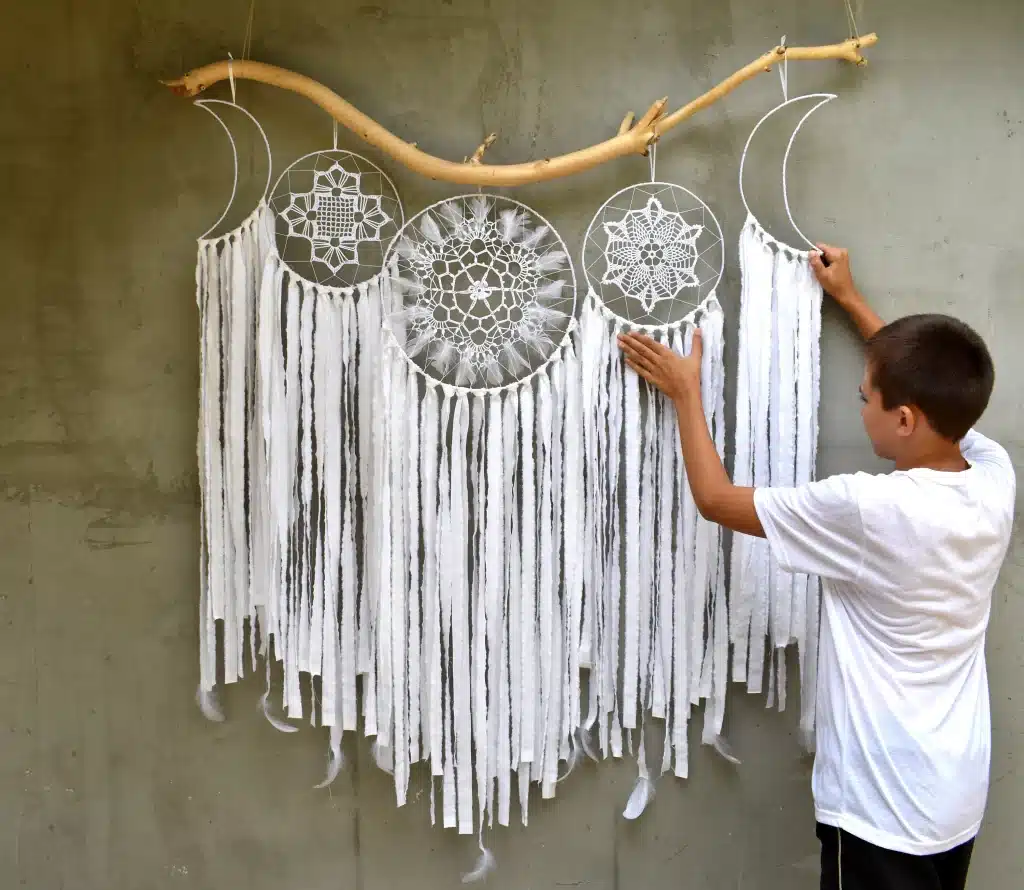
Finding the perfect spot to hang your dreamcatcher is crucial. Traditionally, they are hung above the bed to catch bad dreams, but they can also be displayed in windows or other home areas. The location can affect the dreamcatcher’s effectiveness and aesthetic appeal, so choose wisely.
Maintaining your dreamcatcher is relatively straightforward. Dust it lightly every few weeks and avoid exposing it to direct sunlight for extended periods, as this can fade the colors. Any damaged or worn elements can be replaced without creating a new dreamcatcher from scratch.
The Bottom Line
Creating a dreamcatcher is a rewarding experience that combines artistic expression with cultural appreciation. This step-by-step guide has walked you through each process stage, from gathering materials to adding the final touches. Crafting a dreamcatcher offers a creative outlet and a meaningful way to decorate your space or give a thoughtful gift. So why not take this newfound knowledge and create a dreamcatcher that is uniquely yours? With some time and effort, you can craft a beautiful piece that serves a functional and aesthetic purpose in your home.