
The deep sea, Earth’s final frontier, remains an enigma wrapped in darkness. Covering over 70% of our planet’s surface, it plunges to depths exceeding 11,000 meters, harboring mysteries that have captivated human curiosity for centuries. This vast, unexplored domain is a testament to the limits of human reach and the boundless potential for discovery. As technology advances, we inch closer to unraveling the secrets of these profound depths. Exploring this alien world not only enhances our understanding of life under extreme conditions but also sheds light on the broader ecological dynamics of our planet. In this article, we embark on a journey to uncover the mysteries of the deep sea, diving into its environment, inhabitants, and the human quest to explore and understand it.
The Deep Sea Environment
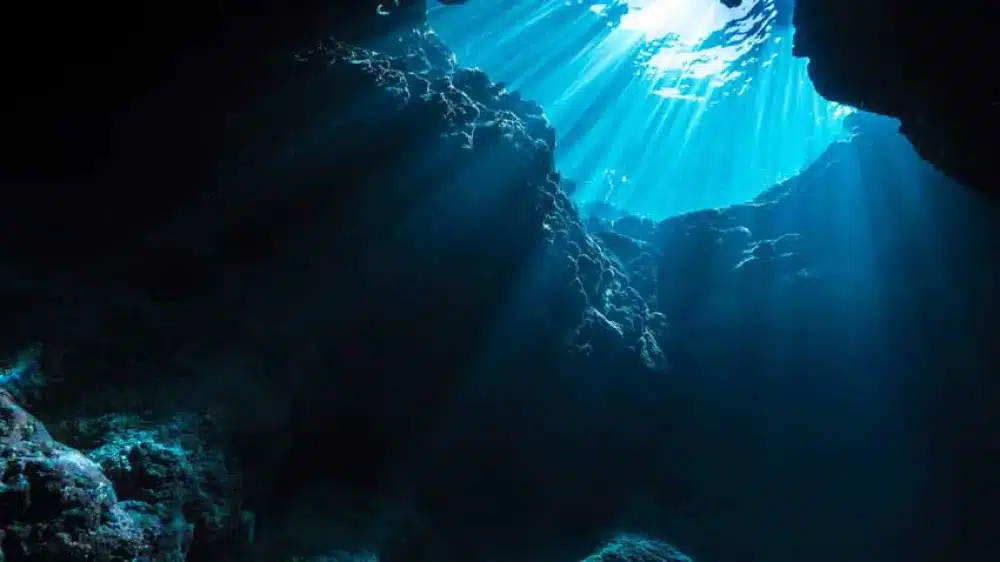
The deep sea environment is a realm of extremes characterized by immense pressure, perpetual darkness, and frigid temperatures. At these depths, sunlight is a stranger, creating an otherworldly landscape where life exists in conditions unimaginable on the surface. The pressure, increasing by one atmosphere every 10 meters in depth, is crushing, and the cold is relentless, with temperatures often hovering near freezing. Yet, despite these harsh conditions, the deep sea is not a lifeless abyss. It teems with many organisms, each uniquely adapted to survive in this challenging environment.
Unique ecosystems such as hydrothermal vents and cold seeps lie amid this harsh setting. Hydrothermal vents, often found near volcanically active places, spew mineral-rich water, providing energy sources without sunlight. These vents are oases in the desert of the deep, hosting diverse communities of organisms. On the other hand, cold seeps emit methane and hydrogen sulfide, supporting another set of specialized life forms. These ecosystems challenge our understanding of life and offer insights into possible extraterrestrial life conditions.
Technological Advances in Exploration

The journey into the deep sea has been a story of technological evolution. Initially, exploration was limited to what could be dredged or observed from the surface. The advent of submersibles, like the famed Trieste, which reached the Challenger Deep, marked a significant milestone, allowing direct human observation of the deep sea. These early explorations opened a new world, revealing an environment far more complex and life-rich than previously imagined.
Today, remotely operated vehicles (ROVs) and autonomous underwater vehicles (AUVs) are at the forefront of deep-sea exploration. These sophisticated machines can dive to great depths, transmitting real-time data and images back to scientists on the surface. This technology has expanded our reach into the deep sea and reduced the risks and costs associated with manned submersions. However, the vastness and complexity of the deep sea continue to pose significant challenges, with much of it still unexplored and awaiting the next technological breakthrough.
Biodiversity in the Abyss

The biodiversity found in the deep sea abyss is as astonishing as it is diverse. This environment, hostile to human life, is home to many species, many of which are yet to be discovered. From the giant squid, elusive and mythical, to the tiny yet crucial microorganisms, the deep sea hosts a spectrum of life that challenges our understanding of biology and ecology.
These creatures exhibit remarkable adaptations. Bioluminescence, the ability to produce light, is a common feature, serving various functions, from attracting prey to warding off predators. The bizarre appearances of many deep-sea creatures, like the anglerfish with its luminescent lure, are a direct response to the demands of their environment. Understanding these adaptations not only fascinates but also provides insights into the resilience and versatility of life.