Contents
The Deep Sea and Climate Change

The deep sea plays a crucial yet often overlooked role in Earth’s climate system. As climate change alters global temperatures, its effects ripple down to these remote depths. The deep sea acts as a significant carbon sink, absorbing carbon dioxide from the atmosphere and helping to regulate Earth’s climate. However, this delicate balance is threatened as rising temperatures and increased carbon dioxide levels impact deep-sea environments.
The consequences of these changes are profound. As ocean temperatures rise, the behavior and distribution of deep-sea species are altered, potentially disrupting entire ecosystems. The melting of polar ice caps also affects deep-sea currents, influencing global weather patterns. Thus, the deep sea, often perceived as remote and disconnected, is inextricably linked to our planet’s climate’s overall health and stability. Understanding and mitigating the impacts of climate change on these deep-sea ecosystems is crucial for the future of our planet.
Deep-Sea Resources and Human Impact
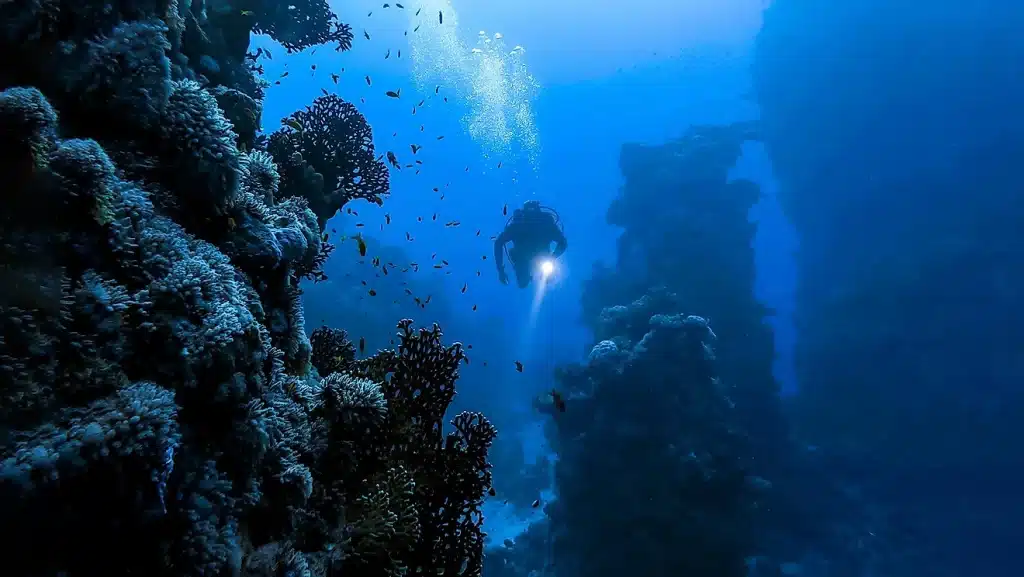
The deep sea is not just a place of scientific interest but also a reservoir of untapped resources. The potential for deep-sea mining, targeting minerals and rare earth elements essential for modern technology, is immense. These resources on the ocean floor offer promising prospects for industries. However, the extraction process poses significant environmental risks. The disruption caused by mining can lead to the destruction of habitats and the loss of biodiversity, some of which may be irreplaceable and unknown to science.
Furthermore, human activities have extended their impact to these once-pristine depths. Pollution, in the form of plastic waste and chemical runoff, has begun to infiltrate deep-sea ecosystems, causing unknown long-term effects. Balancing resource exploitation and environmental conservation is more critical than ever. Sustainable practices and stringent regulations are imperative to protect these deep-sea environments from irreversible damage.
The Role of the Deep Sea in Culture and Mythology

The deep sea has historically been a source of mystery and inspiration in various cultures. It has been portrayed as a realm of monsters and mythical creatures in folklore and literature, reflecting our innate fear and fascination with the unknown. These tales and myths often personify the deep sea as a mysterious, both feared and revered entity.
In contemporary times, the deep sea continues to captivate the public imagination. It features prominently in literature, film, and art, often symbolizing our world’s unexplored and unexplained aspects. This cultural significance underscores the deep sea’s impact on human thought and understanding, transcending scientific curiosity to become a part of our collective imagination.
Discoveries and New Frontiers

Exploring the deep sea has led to numerous scientific discoveries, reshaping our understanding of life and Earth’s history. The discovery of extremophiles, organisms thriving in extreme conditions, has implications for biology and the search for extraterrestrial life. These findings challenge the traditional view of life’s requirements and open new possibilities for understanding life’s resilience.
Moreover, the deep sea offers new frontiers for exploration and research. The potential for discovering new species and geological formations and even uncovering historical artifacts like shipwrecks makes the deep sea a treasure trove for scientists and historians. Each expedition promises new knowledge, contributing to our ever-evolving understanding of the world.
Conservation Efforts and Challenges

Conserving the deep sea is fraught with challenges, primarily due to its inaccessibility and vastness. Efforts to protect these environments are often hindered by a lack of comprehensive knowledge and the complexity of international maritime laws. However, the importance of conservation cannot be overstated, as the health of deep-sea ecosystems is crucial for the overall health of our planet.
Recent initiatives for deep-sea conservation include establishing marine protected areas and implementing international guidelines for sustainable fishing and mining practices. These efforts aim to preserve the delicate balance of life in the deep sea and ensure that its exploration and utilization do not come at the cost of its destruction.
The Bottom Line
The deep sea, Earth’s final frontier, remains a realm of mystery and endless potential. As we continue to explore these profound depths, we uncover new species and ecosystems and gain valuable insights into the resilience and adaptability of life. The deep sea’s mysteries challenge our understanding of the world, inspiring awe and a sense of responsibility toward this uncharted territory. As stewards of our planet, we must explore, understand, and protect these depths for future generations. The deep sea is not just a distant abyss but a vital part of our world, holding keys to understanding life on Earth and possibly beyond.